NEHEMA
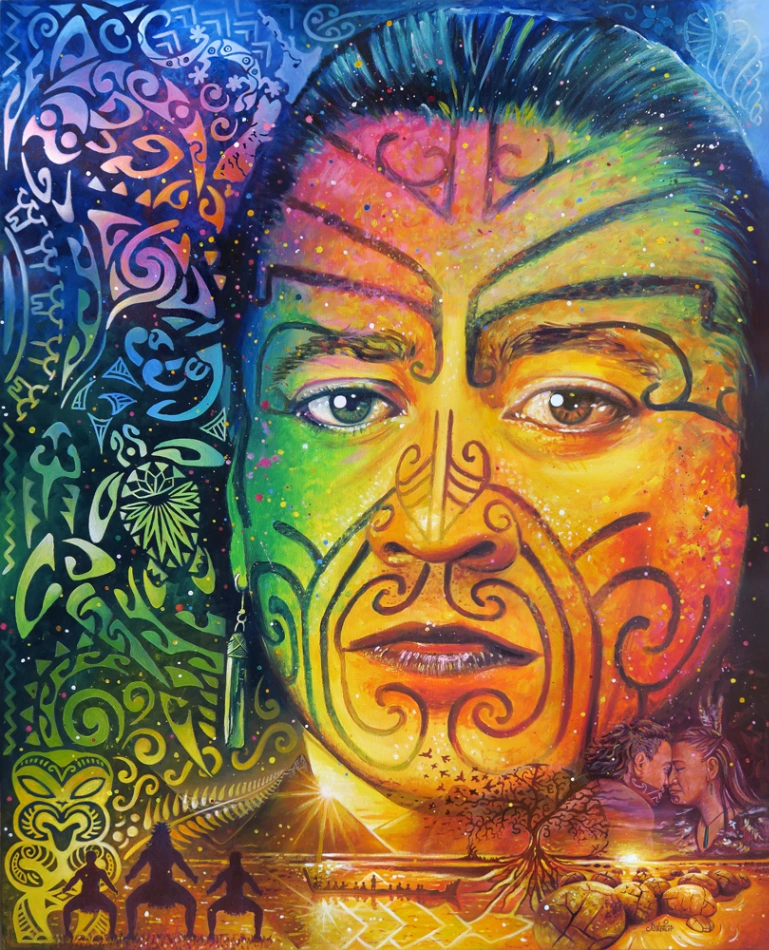
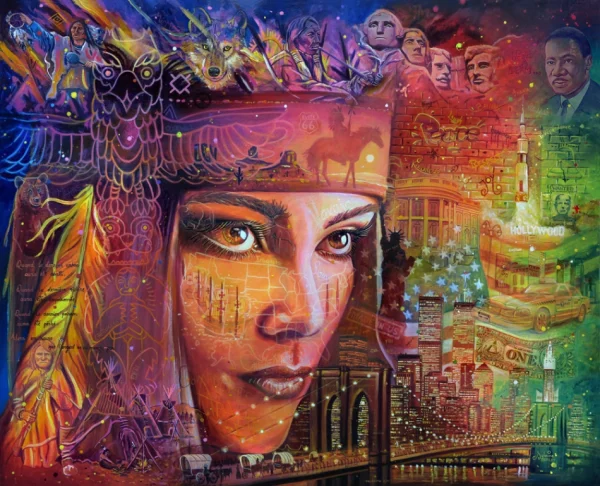
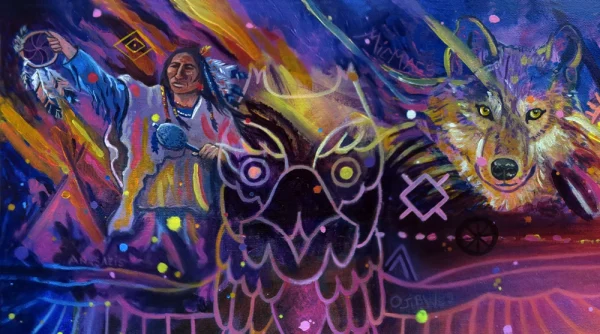
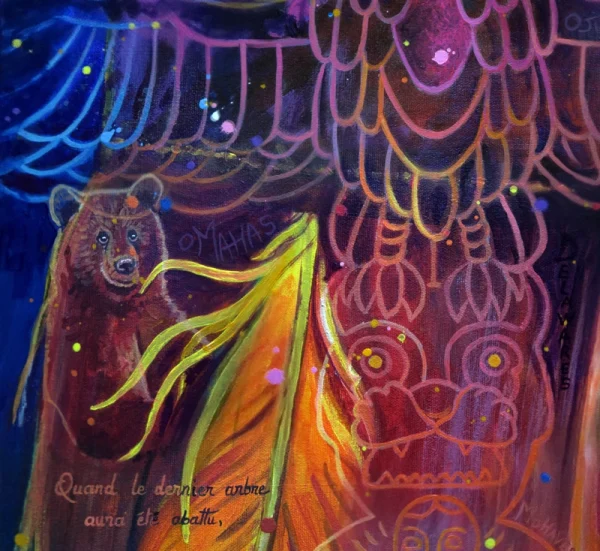
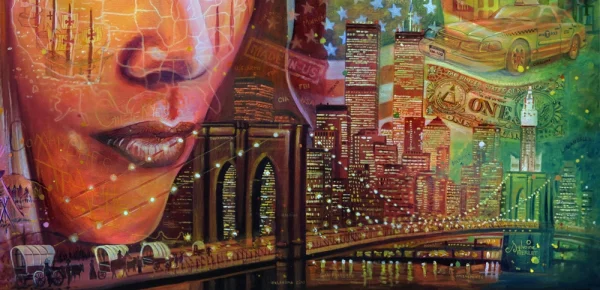
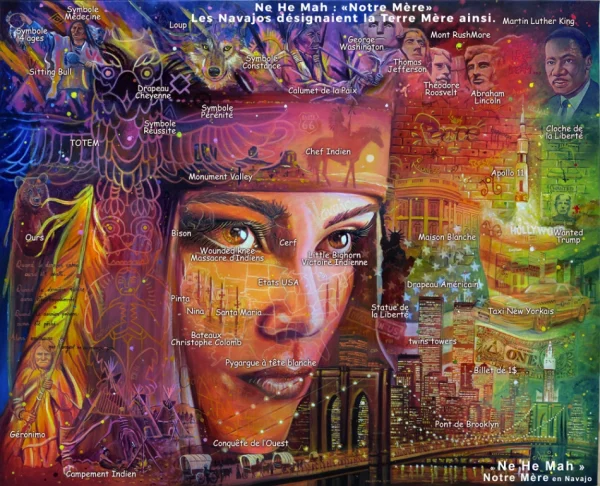
Cette Amérindienne nous dévoile de nombreuses références ancestrales aux Indiens
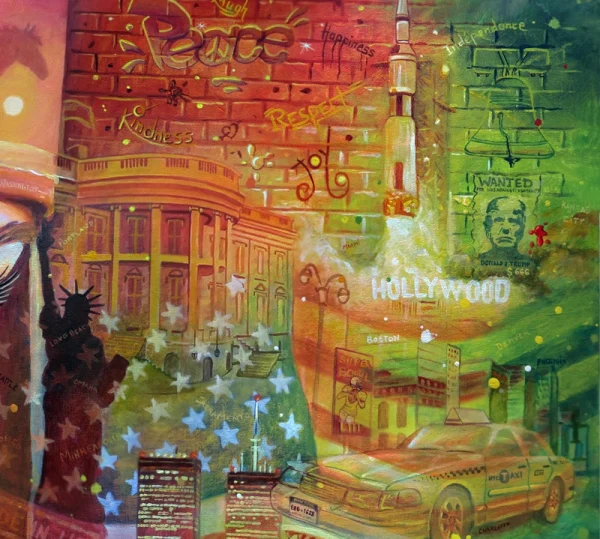
d’Amérique du Nord (partie gauche). Sur la partie droite du Tableau, on retrouve
l’Amérique du XXe Siècle.
about this artwork
“Our Mother Earth” in Navajo.
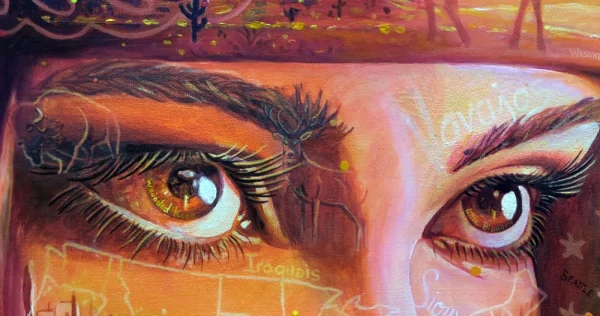
She’s here. She’s watching. His name is Nehemah — “our mother.” His face is an ancient land, a land that remembers.
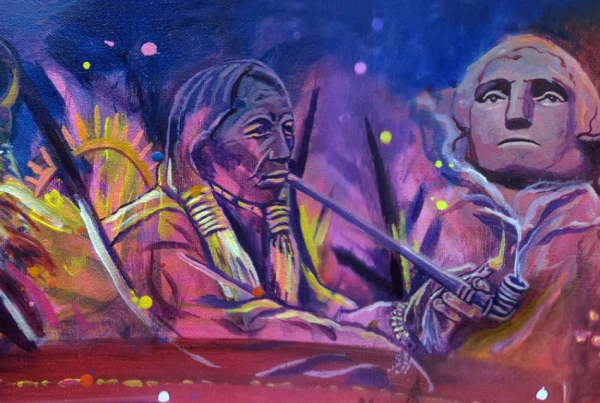
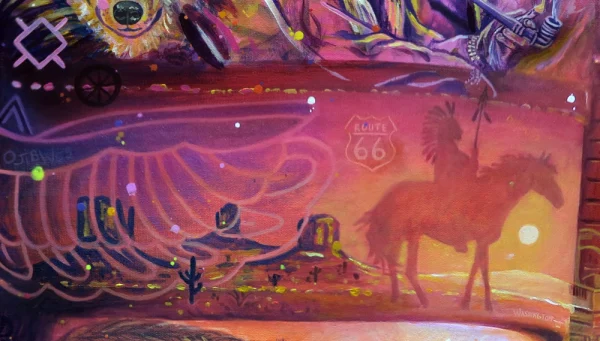
On the left, the breath of the first peoples, the songs, the rites, the red dust and the sacred bond to the earth.
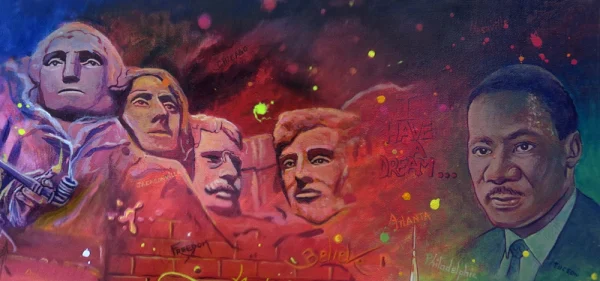
To the right, the tumult of a modern world, made of speed, metal and conquests.
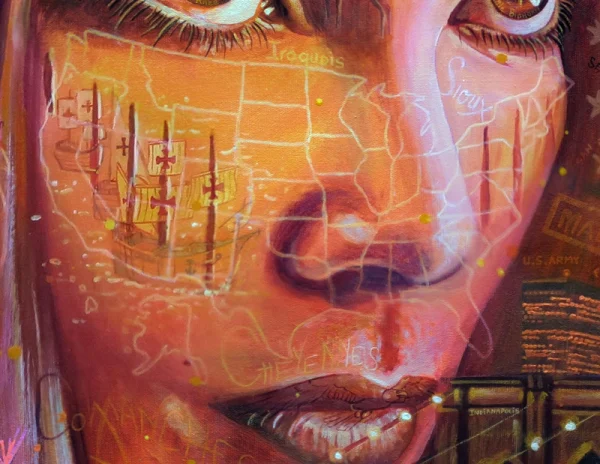
On his skin, marks. Three ships engraved like scars: Pinta, Niña, Santa Maria.
These are not ornaments, but imposed traces, the story inscribed in the flesh.
She lost nothing of her dignity.
It bears in it the memory of a continent that belonged to it before being appointed, before
before being taken.
She’s not screaming. She knows.
Nehemah doesn’t accuse, she calls back, she connects.
It invites us to listen to what the earth still whispers under the noise of the present.
For a mother never forgets her children, even when she was robbed of her house.
This Amerindian reveals many ancestral references to Indians
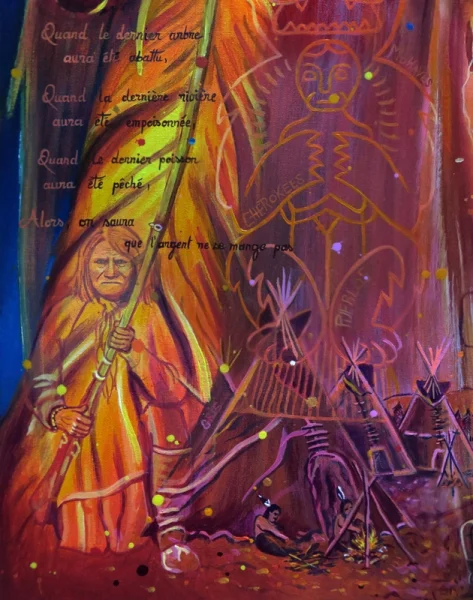
north America (left side) for example: Totem, Sitting Bull, Geronimo, calu-
met, Wounded Knee, Little bighorn, conquete, Monument valley, Indian chef..
On the right side of the painting, we find 20th Century America: Luther King,
mount Rushmore, Trump, White House, Statue of Freedom, Twins powers, Bridge of
Brooklyn, USA, Christopher Columbus, Pinta, Nina, Santa Maria, New York.
about this artist
Sylvaine Merlet’s painting is a crossing.
A dive into the visible and invisible layers of the world, where human, nature
and the imagination intertwined. His images are born of a need to hard what escapes
the words: the emotions buried, the collective memories, the silent bonds that unite the
beings.
The look is at the heart of his approach. It is threshold, passage, mirror. It’s through him that he’s
fragility, strength, doubt and hope prevail. The figures that she painted are not
not content to be seen: they look back, inviting the spectator to a meeting
Intimate, almost meditative.
Each canvas is built as a world to explore. Under the apparent unity arise
fragments, symbols, hidden narratives, like so many strata of thought.
The work reveals itself slowly, to the one who agrees to lose his stature,
let time do its work.
The colour is alive, vibrant, sometimes incandescent. She carries raw emotion, guides the
look and circulate energy. It is breath, impulse, inner movement.
Painting becomes an act of binding:
Connect the human to the living, the present to the ancient myths, the real to the imaginary.
In a fragmented world, Sylvaine Merlet’s painting opens one. Resonance space,
of contemplation and dream where everyone can find a forgotten part of himself.